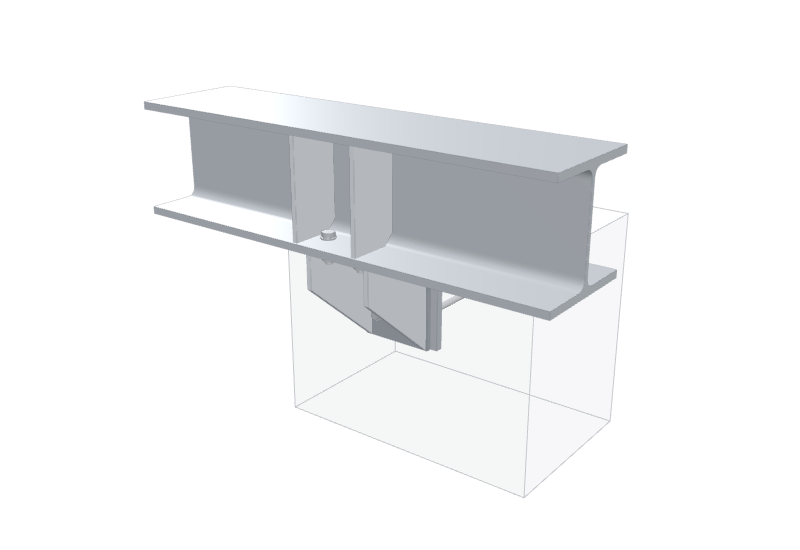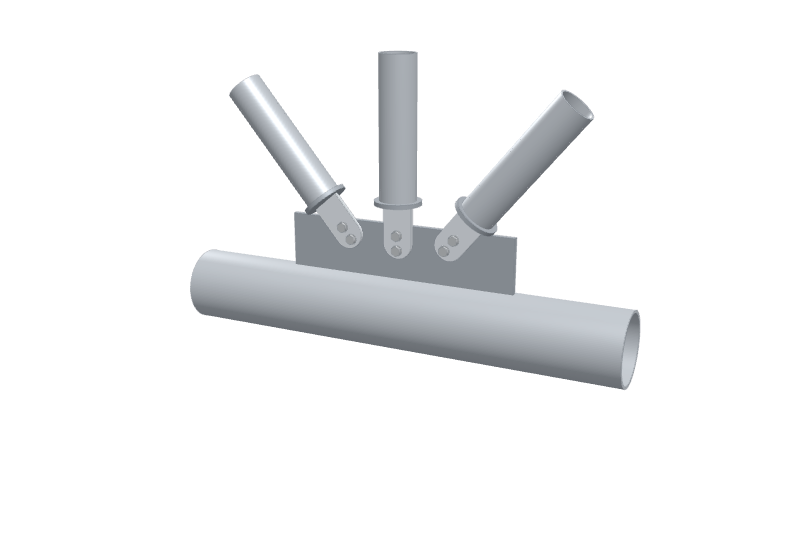
Finite element analysis (FEA).
When the usual formulas fall short.
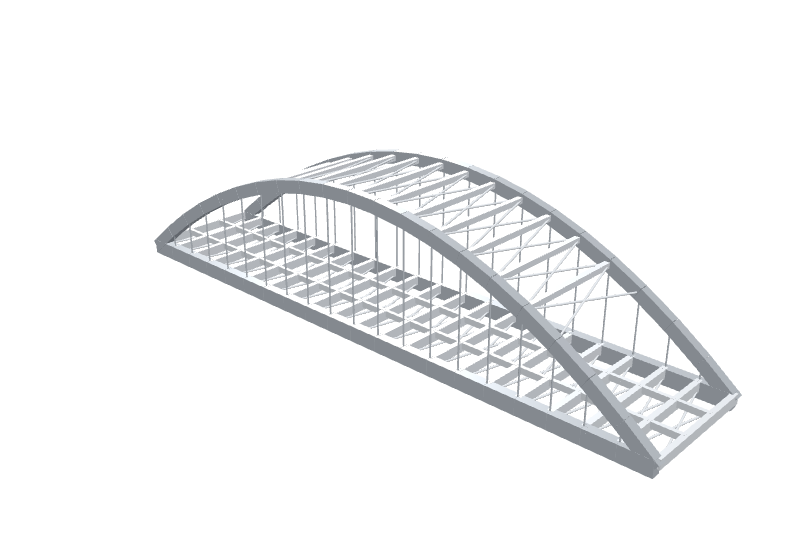
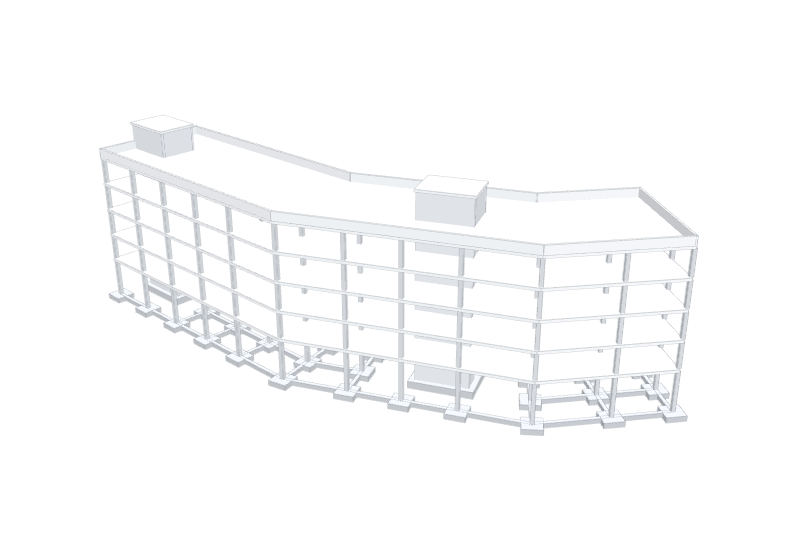
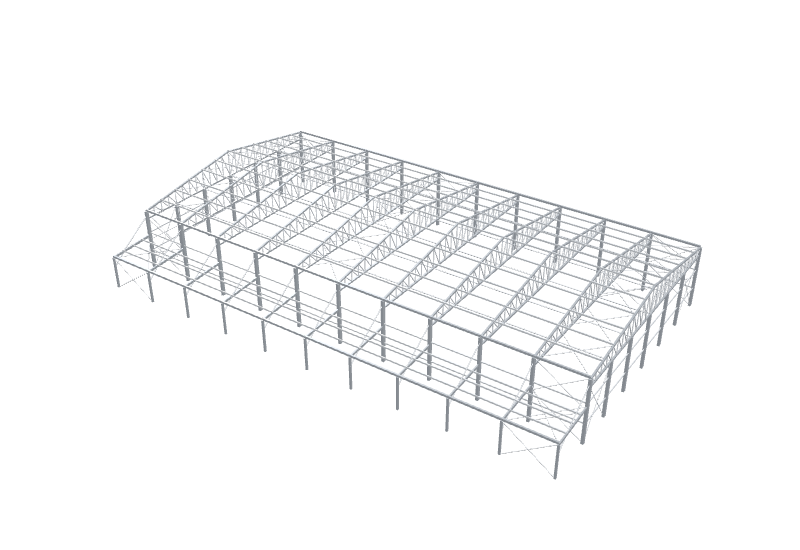
Finite element models for members, connections and structures that are out of the ordinary: stress concentrations, plate buckling, buckling, non-linear, dynamic and vibration analysis. We see how the structure really works before it is built, and we review third-party designs and calculations.
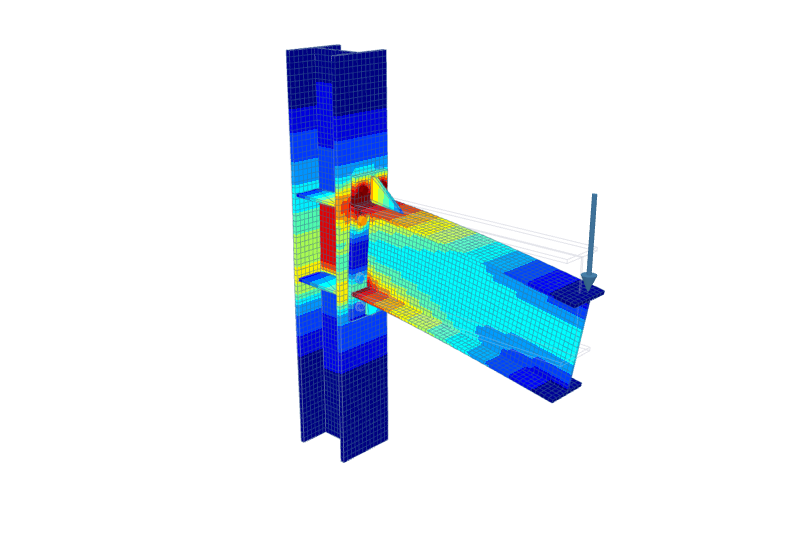
Finite element analysis (FEA)
Seeing how the structure really works
Some parts, connections and structures go beyond what the code formulas cover: unusual geometries, plates with openings, stress concentrations, dynamic loads or materials working beyond the linear range. That is where finite element analysis (FEA) shows how the structure really works before it is built.
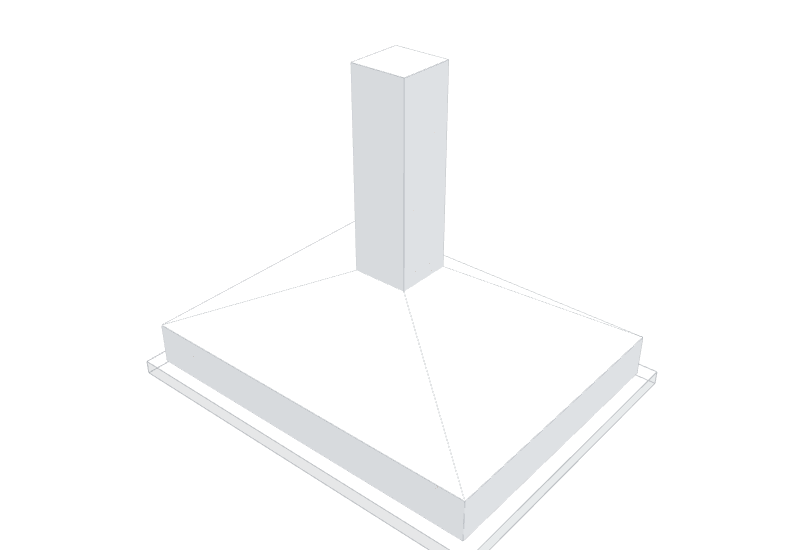
We build finite element models of steel parts and connections, brackets, gussets and special joints, and carry out non-linear, buckling and plate buckling, dynamic and vibration analyses. We interpret the results with engineering judgement and check them against whatever codes apply (Eurocode 3 Parts 1-5 and 1-6, Eurocode 8, etc.).
We also review third-party designs and calculations when a second opinion is needed. We deliver a clear report with the model, assumptions, results and conclusions, so that it is genuinely useful to whoever has to decide.
When you need us
- A part or a connection cannot be checked with the usual methods.
- You need to justify a plate with openings, a gusset or a special joint.
- A structure vibrates or will carry dynamic loads (machinery, people, wind).
- You want to optimise a part that is mass-produced.
- You need a second opinion on an existing calculation.
Frequently asked questions
When is finite element analysis needed?
When the geometry, loads or material behaviour go beyond what the usual formulas cover, or when you want to refine the design of a part beyond what simplified methods allow.
Does it replace code-based design?
No, it complements it. The finite element model is interpreted and checked against the applicable codes; in fact, the Eurocodes allow finite element analysis for these cases.
What do you deliver?
A report describing the model, the design assumptions, the results (stresses, deformations, buckling or vibration modes) and the conclusions, with the figures needed to understand it.
Do you review other people’s calculations?
Yes: we review third-party designs and calculations, with finite elements or with the usual methods, and tell you clearly what is right and what should change.